February, 2024 - Unified Sports

February 2024

Things To Do To Monetizing Your Athlete Status

  1. Skill Enhancement and Training:
  • To monetize your athlete status, prioritize continuous improvement in your athletic skills. Regularly assess your strengths and weaknesses to identify areas for growth.
  • Invest time in specialized training programs and work closely with coaches to refine your techniques and enhance your overall performance.
  • Stay dedicated to your fitness regimen, ensuring that you are in peak physical condition to compete at the highest level.
  1. Build a Strong Personal Brand:
  • Develop a compelling personal brand that showcases not just your athletic abilities but also your personality, values, and story.
  • Leverage social media platforms to share engaging content, including training videos, behind-the-scenes glimpses, and personal achievements.
  • Engage with your audience by responding to comments, participating in Q&A sessions, and sharing aspects of your life beyond sports.
  1. Strategic Partnerships and Sponsorships:
  • Seek out partnerships and sponsorships with brands that align with your values and resonate with your target audience.
  • Showcase the value you can bring to potential sponsors, emphasizing your reach, engagement, and influence within the athletic community.
  • Collaborate with brands on mutually beneficial marketing campaigns, creating a win-win situation for both parties.
  1. Diversify Income Streams:
  • Explore various avenues to monetize your athlete status, such as merchandise sales, personalized coaching sessions, and endorsement deals.
  • Consider creating and selling digital content, including online courses, workout routines, or exclusive access to behind-the-scenes content.
  • Investigate opportunities for public speaking engagements, appearances, and partnerships that can contribute to your overall income.

Now What? Decoding the Post-Monetization Puzzle

Cheers on securing those lucrative deals! The grind has paid off. Now it’s time to make every earning opportunity count. However, with success comes responsibility, and the burning question is: What steps should you take now? The possibilities seem boundless; should you rev up content creation, attend exclusive events, or invest in strategic financial moves? Worry not; this post is your roadmap to actionable steps post-monetizing your athlete status.

Revealing the Blueprint: 4 Steps to Optimize Your Earnings

Step 1: Financial Network Expansion

Don’t kick back just yet. Identify key players in your financial network who align with your brand’s financial ethos. Dive into relevant keywords to spot potential collaborators. Your outreach game is paramount – personalize your messages and utilize tools to secure those elusive contacts.

Step 2: Diversify Your Revenue Streams

Don’t rely solely on your current earnings strategy. Explore new avenues to maximize your financial potential. Whether it’s investments, endorsements, or brand partnerships, keep your revenue streams diverse and flourishing.

Step 3: Smart Financial Management

A single windfall won’t secure your financial future. Strategically manage your finances with an eye on long-term sustainability. Financial potency is unmatched – use it to amplify your sponsor’s message and broaden your financial reach.

Step 4: Foster Long-lasting Financial Relationships

Long-lasting connections are the key to sustained financial success. Engage with financial advisors, sponsors, and your audience. Swift responses to financial queries build credibility and fortify your brand’s financial longevity.

Post-Monetization Actions Speak Louder

Your journey only concludes when the financial contracts are signed. What you do afterward is equally pivotal. A robust financial portfolio without effective financial promotion is like a hidden treasure. Implement these strategies, and watch your earnings soar to new pinnacles.

Quick Recap of Winning Tips

From financial network leverage to diversified revenue streams, these post-monetization strategies are your golden ticket. Smart financial management, engaging financial content, and responsive communication are in your arsenal. Now, armed with these insights, how will you reshape your post-monetization narrative? Ready to make a lasting financial impact?

What’s Your Financial Game Plan

Now it’s your turn, How do you plan to redefine your post-monetization approach? Will smart financial management take center stage, or is it time for strategic outreach to key financial connections? Share your financial playbook in the comments, and let’s embark on this financial journey together.

Contact us for more information! 

You can call us at +91- 9311593910, +91-8085094046

Or email us at help@unifiedsports.in

Visit us at 209, C9, 2nd floor, Pearls Best Heights -2, NSP, Pitampura, Delhi

In the ever-evolving landscape of sports science, cross-training has emerged as a pivotal strategy to enhance athletic performance and reduce the risk of injuries. The integration of various training modalities not only diversifies an athlete’s skill set but also provides physiological benefits that can significantly impact overall fitness. In this blog, we will delve into the science behind effective cross-training, exploring the data that supports its role in optimizing athletic capabilities.

Diversification of Training Stimuli

Cross-training involves engaging in different types of exercises to target various muscle groups and movement patterns. A study published in the Journal of Strength and Conditioning Research found that diversifying training stimuli can lead to improved neuromuscular adaptation and overall athletic performance. By exposing the body to different stressors, athletes can enhance their ability to adapt and respond to varying physical demands.

Example: A cricketer incorporating yoga into their training routine can enhance flexibility and balance. Yoga poses like tree pose and warrior series contribute to improved joint stability and reduce the risk of injuries associated with sudden directional changes on the cricket field.

Reduction of Overuse Injuries

Participating in a single sport with repetitive movements can lead to overuse injuries. According to research in the American Journal of Sports Medicine, cross-training helps mitigate the risk of overuse injuries by distributing the load across different muscle groups and joints. This reduction in repetitive stress allows for better recovery and a lower incidence of chronic injuries.

Example: A kabaddi player integrating strength training exercises, such as weightlifting or bodyweight workouts, can enhance muscular strength. This cross-training approach helps in building the necessary power for effective raids and tackles while reducing the likelihood of overuse injuries.

Enhanced Cardiovascular Fitness

Cross-training often involves a mix of aerobic and anaerobic exercises, contributing to improved cardiovascular fitness. A meta-analysis in the British Journal of Sports Medicine demonstrated that athletes incorporating diverse cardiovascular activities experienced greater improvements in VO2 max compared to those engaged in a single modality. This enhanced cardiovascular capacity translates to increased endurance and improved overall performance.

Example: A long-distance runner supplementing their training with cycling can optimize cardiovascular fitness. Cycling provides a low-impact alternative that complements running, contributing to improved endurance without placing excessive stress on the joints. This cross-training approach is especially relevant for marathon runners preparing for extended races.

Muscular Balance and Joint Stability

Engaging in cross-training activities that target different muscle groups helps establish muscular balance and joint stability. Research in the Journal of Sports Sciences indicates that a balanced musculature reduces the risk of muscle imbalances, which can lead to compensatory movements and, eventually, injuries. Cross-training fosters joint stability by addressing weaknesses and promoting a more symmetrical development of muscle strength.

Example: A badminton player incorporating plyometric exercises like jump squats and box jumps can enhance explosive power. Plyometrics mimic the dynamic movements involved in badminton, such as quick lateral movements and powerful jumps, contributing to improved on-court agility and performance.

Psychological Benefits of Cross Training

    The psychological aspect of cross-training is equally significant. A study in the Journal of Applied Sport Psychology highlights that the variety inherent in cross-training regimens can reduce boredom and increase adherence to exercise programs. Athletes who enjoy a diverse training routine are more likely to stay motivated, ultimately leading to consistent and sustained improvements in performance.

    Example: A footballer incorporating swimming into their routine on recovery days can optimize the recovery process. Swimming offers a low-impact, full-body workout that promotes blood circulation and aids in muscle recovery, allowing the player to maintain peak performance throughout the football seas

    Neurological Adaptations and Skill Transfer

    Cross-training stimulates neurological adaptations that can positively impact skill acquisition and transfer. A research article in the International Journal of Sports Physiology and Performance suggests that engaging in diverse activities enhances motor learning and coordination. These neurological adaptations can translate to improved sports-specific skills, giving athletes a competitive edge in their primary sport.

    Example: A wrestler engaging in martial arts training, such as judo or Brazilian jiu-jitsu, can experience skill transfer benefits. The varied techniques and movements in martial arts contribute to enhanced overall grappling skills and adaptability on the wrestling mat.

    Optimized Recovery

    Effective recovery is integral to long-term athletic success. Cross-training allows athletes to engage in low-impact activities, such as swimming or cycling, on recovery days. According to a study in the Journal of Sports Sciences, active recovery through cross-training promotes blood flow, reduces muscle soreness, and accelerates the removal of metabolic byproducts, contributing to faster recovery between intense training sessions.

    Discover the best sports colleges in Australia with us! We’ll explore the top 5 places where athletes learn and train. From cool facilities to a mix of sports and passion, let’s dive into Australia’s sports world. Ready to explore? Let’s go

    1. Deakin University 

    Deakin University, a public institution in Victoria, Australia, boasts main campuses in Melbourne’s Burwood, Geelong Waurn Ponds, Geelong Waterfront, and Warrnambool, along with the online Cloud Campus. As of 2021, it proudly holds a spot among the top 30% of global universities and ranks as one of the top 26 young universities worldwide. Notably, it stands as the 3rd-highest-ranked university globally for sports science. 

    Deakin consistently excels in undergraduate student satisfaction, securing the fourth-highest rating nationally in the 2019 Student Experience Survey. Offering a diverse array of sports courses, Deakin University is a beacon for sports enthusiasts seeking top-tier education and unparalleled experiences.

    Courses offered at Deakin University are:- 
    Bachelor of Exercise and Sports ScienceUndergraduate degree
    Bachelor of Exercise and Sport Science/Bachelor of Business (Sport Management)Undergraduate degree
    Bachelor of Sport DevelopmentUndergraduate degree
    Bachelor of Health and Physical EducationUndergraduate degree
    Graduate Certificate of Strength and ConditioningPostgraduate Coursework
    Graduate Certificate of Business (Sport Management)Postgraduate Coursework
    Master of Applied Sport SciencePostgraduate Coursework

    Dive into the world of opportunities at Deakin University by applying for courses through this link. 

    Apply Here: https://www.deakin.edu.au/study/find-a-course/sport

    2. The University of Technology, Sydney

    Situated in Sydney, Australia, the University of Technology Sydney (UTS) takes the global stage, holding the impressive 90th global rank. UTS actively recognizes and supports over 180 clubs and societies.

    UTS Sport oversees varsity teams, competing fiercely in both UniSport Nationals and standalone national championships throughout the year. The university proactively offers a variety of sports programs for both undergraduate and postgraduate students.

    Courses offered at the University of Technology are:-

    Bachelor of Sport and Exercise ManagementUndergraduate degree
    Bachelor of Sport and Exercise ScienceUndergraduate degree
    Bachelor of Sport and Exercise Management Bachelor of International Studies (Honours)Undergraduate degree
    Master of Clinical Exercise PhysiologyPostgraduate degree
    Master of High-Performance SportPostgraduate degree
    Master of Sport and Exercise (Research)Postgraduate degree

    Explore the realm of possibilities at the University of Technology by submitting your course applications through this provided link.

    Apply Here: https://www.uts.edu.au/study/health/sport-and-exercise#panel-postgraduate

    3. The University of Queensland

    Situated in Brisbane, Queensland, the University of Queensland isn’t just a university, it’s a powerhouse. UQ proudly claims the top spot in Australia and an impressive second place globally for Sports-Related Subjects. It’s a hub of excellence where academia meets athletic prowess.

    Ranked among the world’s top 50 institutions, UQ stands tall as one of Australia’s premier research and teaching universities. The bustling campus is a melting pot of innovation, fostering an environment where students don’t just learn, they thrive.

    The courses offered at the University of Queensland are;-

    Bachelor of Exercise and Sports Science Undergraduate degree
    Bachelor of Health Sports and Physical Education Undergraduate degree
    Clinical Exercise Physiology Undergraduate degree
    Bachelor of Health Science Undergraduate degree
    Masters of Sports Medicine Postgraduate degree
    Masters of Sports Coaching Postgraduate degree

    Embark on a journey of possibilities at the University of Queensland by sending in your course applications through this provided link.

    Apply Here: https://study.uq.edu.au/studyoptions/programssearch=Sports%20&type=program&level[Undergraduate]=Undergraduate&year=2024

    4. The University of Western Australia 

    In Western Australia, the University of Western Australia (UWA) stands as the oldest public research university, boasting top rankings globally. As a proud member of the prestigious Group of Eight, UWA holds a spot among Australia’s elite research-intensive universities. With over 80 research institutes and centers, it’s a hub of innovation. 

    UWA actively supports high-achieving students through scholarships and offers a diverse array of sports-related courses, allowing students to pursue their passions.

    Courses offered at The University of Western Australia are:-

    Bachelor of Sport and Exercise Sciences Undergraduate degree
    Bachelor of Sports ScienceUndergraduate degree
    Master of Public HealthPostgraduate degree
    Master of Clinical Exercise PhysiologyPostgraduate degree

    Embark on a journey of opportunities at the University of Western Australia by submitting your course applications through the designated link.

    Apply Here: https://www.uwa.edu.au/study/how-to-apply

    5. Australian College of Sports 

    The Australian College of Sport (ACS) actively delivers nationally accredited high-performance training and education to students and leavers. Collaborating with peak sporting organizations, professional clubs, secondary schools, and university partners, ACS strives to develop talented athletes through tailored programs. 

    Graduates find diverse pathways in athletics, education, and industry-specific to their chosen sport. Established in a pilot program with the State Government of South Australia in 2006, ACS actively expands its reach.

    Courses offered at the  Australian College of Sports are:-

    Diploma of Sports ManagementDiploma course 

    Embark on a journey of endless possibilities at the Australian College of Sports 

     by submitting your course applications through the provided link.

    Apply Here: https://www.iscaustralia.edu.au/diploma-sports-management/#industry-placement

    1. Jamia Hamdard University

    Jamia Hamdard University proudly holds an A+ accreditation from NAAC. Within its Department of Physiotherapy, there lies a spectrum of educational opportunities, offering both Undergraduate and Postgraduate Programs. The university’s commitment to quality is further affirmed by its recognition from the Delhi Council for Physiotherapy & Occupational Therapy.

    Navigating the academic landscape, the department is fortified with state-of-the-art facilities. The Electrotherapy and Exercise therapy labs and the Sports and Exercise research labs embody modern infrastructure, facilitating an enriching learning environment.

    For prospective students, eligibility hinges on a 10+2 merit record or success in entrance examinations such as BCECE, NEET, and CET IPU. As you embark on this educational journey, it’s noteworthy that the average fee structure ranges from Rs. 20,000 to Rs. 10,00,000, reflecting the diverse financial considerations of aspiring physiotherapists.

    2. Sri Ramachandra Medical College

    Formerly recognized as SRMC & RI (DU), Sri Ramachandra Institute of Higher Education and Research proudly stands as a distinguished health sciences university in India. Within their offerings, they present the esteemed Bachelor of Physiotherapy (BPT) program.

    Eligibility for the BPT program mandates successful completion of an HSC Examination (Academic Stream) under the 10+2 curriculum, CBSE, ISC, with a foundation in English, Physics, Chemistry, Biology, or Botany and Zoology.

    Sri Ramachandra Institute extends a Master in Physiotherapy (MPT) program, a two-year academic pursuit. Eligibility for MPT requires possession of a Bachelor of Physiotherapy degree certificate with a minimum duration of 3 and 1/2 years, including a 6-month internship. This qualification can be earned from any university through a full-time contact program or an equivalent degree from another recognized institution.

    3. M.M. Institute of Physiotherapy and Rehabilitation-MMIPR, Ambala

    MM Institute of Physiotherapy and Rehabilitation, commonly known as MMIPR, stands as a leading institution in North India with recognition from the Indian Association of Physiotherapists.

    Within the Department of Physiotherapy at MMDU, diverse academic avenues await. The Bachelor of Physiotherapy (BPT) extends over four years and eight semesters, including a compulsory six-month rotatory internship. For those aspiring for advanced specialization, the Master of Physiotherapy (MPT) program spans two years and four semesters, offering expertise in Orthopaedics, Sports, Neurology, Pediatrics, and Cardiopulmonary diseases. Additionally, the institute provides opportunities for doctoral studies with a PhD in Physiotherapy.

    The fee structure at MMIPR ranges from Rs. 90,000 to Rs. 1,00,000, ensuring accessibility for students with various financial considerations.

    Eligibility for the BPT course requires candidates to be 17 years or older by December 31st of the admission year. They should have passed the XII STD/ HSE examination with a minimum of 50% marks in science, including Physics, Chemistry, Biology, and English as mandatory subjects (45% for reserved categories) from a recognized Board/ University. Join MMIPR for a transformative journey in physiotherapy education.

    4. DAV Institute of Physiotherapy and Rehabilitation 

    Discover the offerings at the DAV Institute of Physiotherapy and Rehabilitation (DAVIPR) situated in Jalandhar. The institute extends a Bachelor of Physiotherapy (BPT) spanning four years and six months, alongside a two-year Master of Physiotherapy (MPT) specialized in Sports and Rehabilitation. Eligibility criteria dictate a 10+2 educational background with a requisite combination of Physics, Chemistry, Biology, and English.

    The program accommodates a total of 60 seats. Tuition fees are subject to adherence to Punjab Government regulations, which undergo periodic amendments. Charges are applied on an annual basis, by the prevailing rules stipulated by the government.

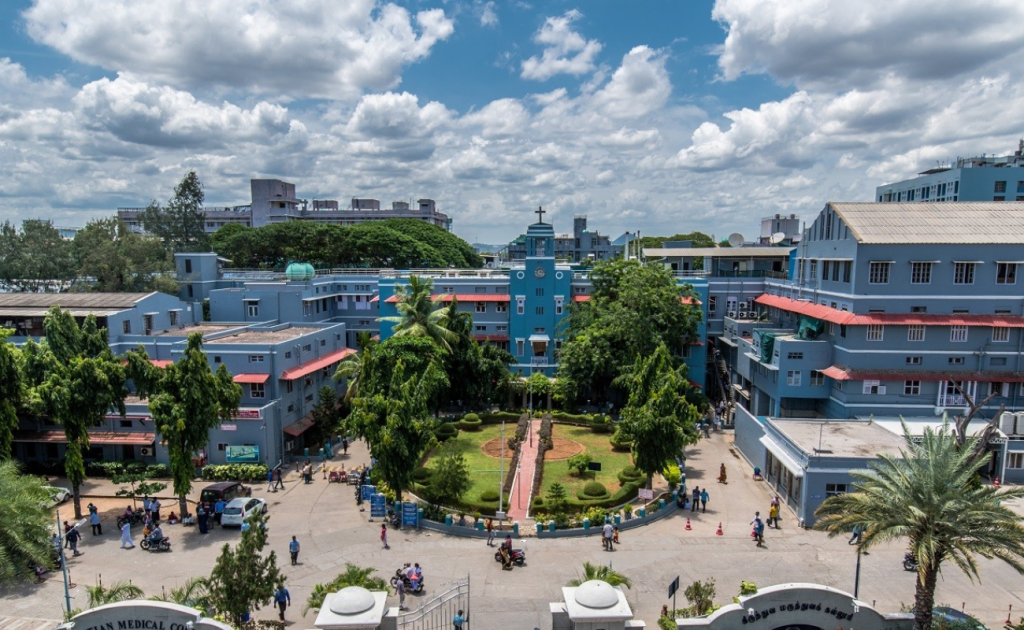
    5. Christian Medical College Vellore 

    Christian Medical College Vellore (CMC) stands tall among India’s premier medical colleges, renowned for its undergraduate, postgraduate, and higher specialty courses in medicine, nursing, allied health sciences, and related disciplines. Notably, CMC Vellore achieved an impressive NIRF ranking of 3 out of 50 in India for the year 2023.

    Within its offerings, the Bachelor of Physiotherapy course unfolds over four years, culminating in a compulsory six-month rotating internship. This comprehensive program is accessible to students who have completed 12 years of school education. Under this category, a nominal processing fee of Rupees 1000.00 and a tuition fee of Rupees 6000.00 per six weeks are applicable.

    Eligibility criteria for aspiring candidates mandate a pass in 10+2 with a commendable 50% marks aggregate in English, Physics, Chemistry, and Biology. Christian Medical College Vellore welcomes individuals with a passion for healthcare to embark on a transformative educational journey.